
The truth is, we should have.
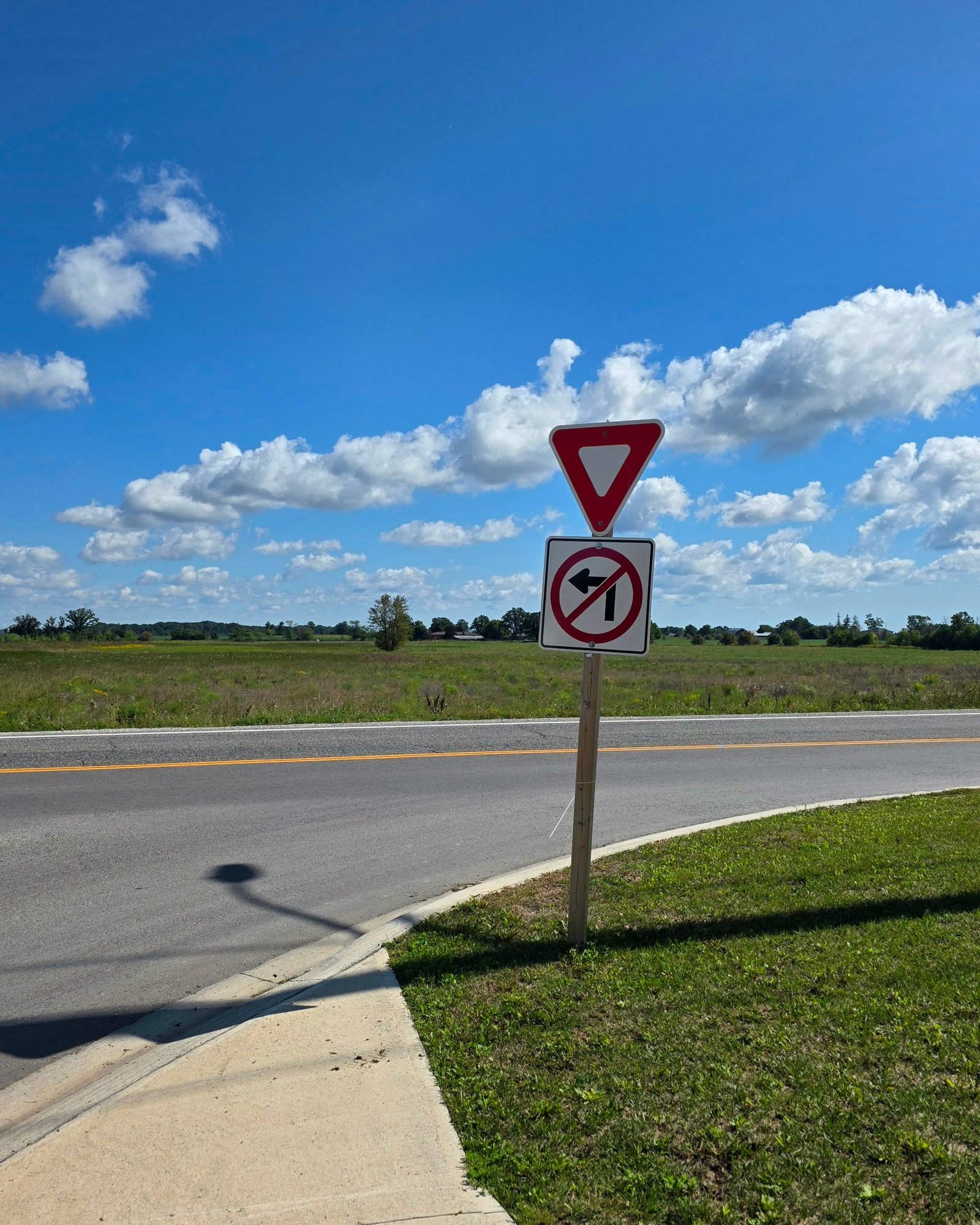
If you live in the newer subdivisions near Whitlock Avenue and James Snow Parkway, you likely face the same daily frustration: pulling up to the intersection and staring at a “No Left Turn” sign. You cannot turn north toward Highway 401; you are forced into detours.
This is a textbook example of “infrastructure lag,” and it exposes a serious financial and safety vulnerability for taxpayers in Milton.
The Infrastructure Lag
The Town allowed developers to finish construction and hand over the keys to new homeowners, but the Regional infrastructure required to safely carry that new traffic remains years away. According to the North Halton Coordinated Municipal Class Environmental Assessment (MCEA) for this corridor, the preliminary design mandates widening the roadway to six vehicle lanes and installing a fully signalized intersection at Whitlock Avenue.
However, completing an Environmental Assessment is just the first bureaucratic hurdle. Halton Region must still navigate years of detailed engineering design, land acquisitions, and utility relocations before construction can even begin. Because actual construction is realistically years away, the corridor lacks the capacity to safely handle left turns across high-speed traffic, forcing a “right-out only” detour. The private homes were built first, ready to occupy, but the capacity of the municipal arterial road lagged behind.
The Financial Trap: Will Growth Actually Pay for Growth?
When infrastructure is delayed, the standard “growth pays for growth” formula breaks down:
- Inflation Erodes Reserves
When the Region collects Development Charges (DCs) at approval but waits years to widen the road, construction inflation outpaces the funds.
- The Taxpayer Subsidy
Municipalities cannot retroactively bill developers for that gap. The deficit exacerbated by a $32.5 million DC revenue shortfall across Halton due to provincial legislation, must be covered by Regional debt or property taxes.
- The “Benefit to Existing” Burden
Because residents move in years before the road expands, provincial law reclassifies a share of the future widening as a “benefit to existing” taxpayers, legally forcing current residents to subsidize the capital cost.
The Compounding Threat: CN Logistics Hub Spillover
This intersection gap becomes far more critical when paired with the CN Logistics Hub, scheduled to begin operations in 2027. The facility will generate up to 1,600 daily heavy-duty truck trips. Regional traffic modelling confirms that when the Tremaine/Britannia corridor congests, commercial trucks will seek alternate routes east via James Snow Parkway.
Because CN operates under federal jurisdiction, they bypass standard municipal Development Charges entirely—meaning they contribute zero dollars toward widening the municipal arterial roads their freight will deteriorate.
Watch my video explaining why this corridor isn’t ready for the 2027 CN Hub.
The Practitioner’s Solution
We cannot continue absorbing rapid residential and industrial growth while our Regional road network perpetually plays catch-up. My platform focuses on actionable, technical policy solutions:
- Synchronized Approvals
Align subdivision occupancy approvals strictly with Regional capital delivery milestones so arterial capacity is delivered before families move in.
- Enforce Freight Routing
Develop heavy truck route by-laws and push for dedicated commercial corridors to prevent heavy logistics trucks from spilling into residential segments along James Snow Parkway.
- Lifecycle Asset Costing
Utilize full lifecycle accounting to ensure the municipal tax base is protected from accelerated road wear and unfunded capital gaps.
We cannot allow commercial traffic to turn unwidened residential corridors into cut-through bypass routes.
Elevating Our Standard of Leadership
The James Snow Parkway bottleneck is not an unavoidable accident; it is the writing on the wall. For too long, our Town and Regional Councils have relied on reactive problem-solving. The traditional logic of “if it ain’t broke, don’t fix it” should not apply to expensive municipal infrastructure assets that carry high service impacts for residents and reputational risks that deter local economic development. We are not talking about replacing light bulbs here.
Milton deserves better than reactive decision-making. We need disciplined, data-driven infrastructure planning that anticipates growth and the inevitable baggage that comes with it, years in advance.
More importantly, we need elected officials on our Councils who are forward-looking in their stewardship role and embrace the management of change by quickly adapting to structural shifts in our external operating environment—such as the CN Logistics Hub scheduled to begin intermodal operations in 2027.
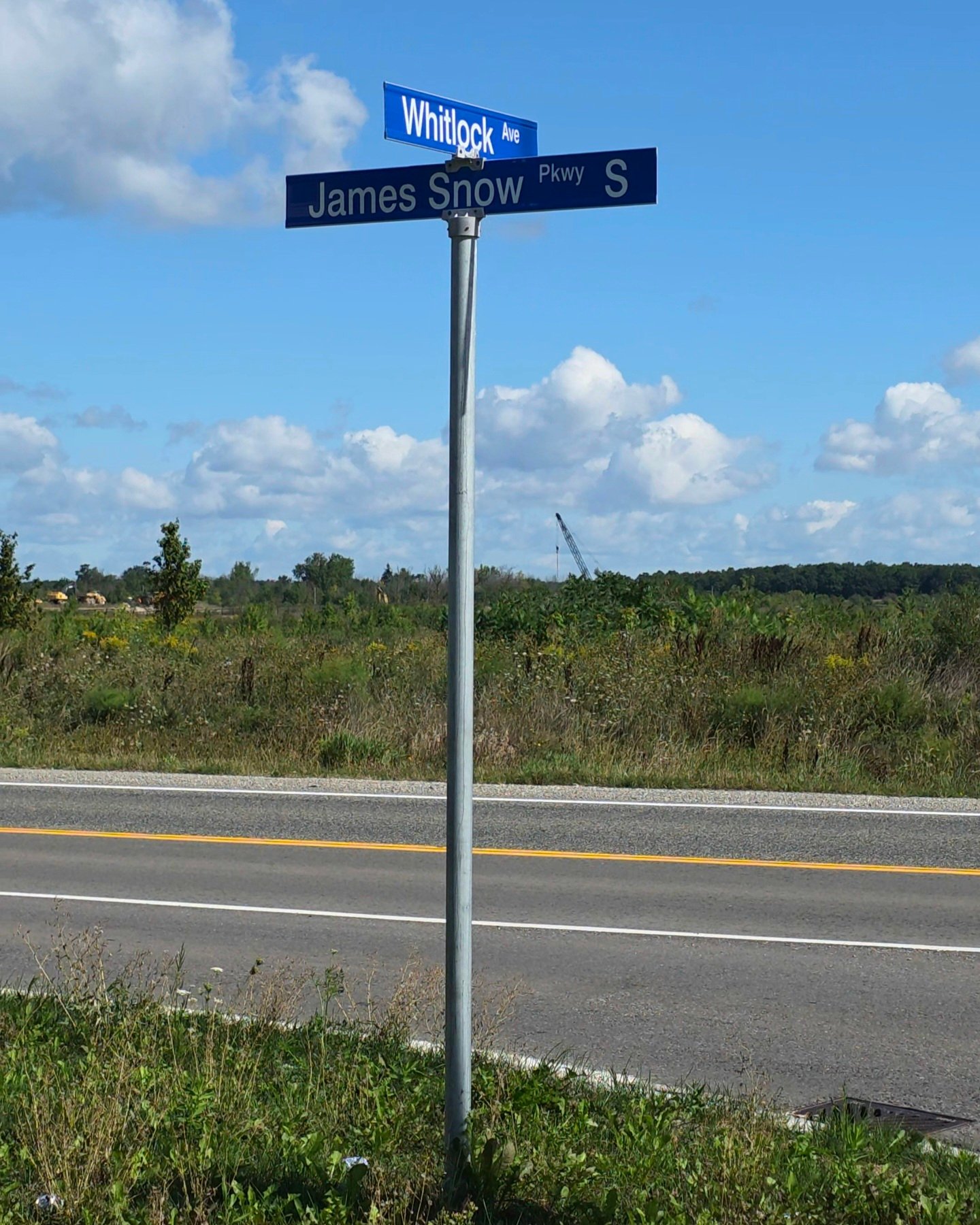

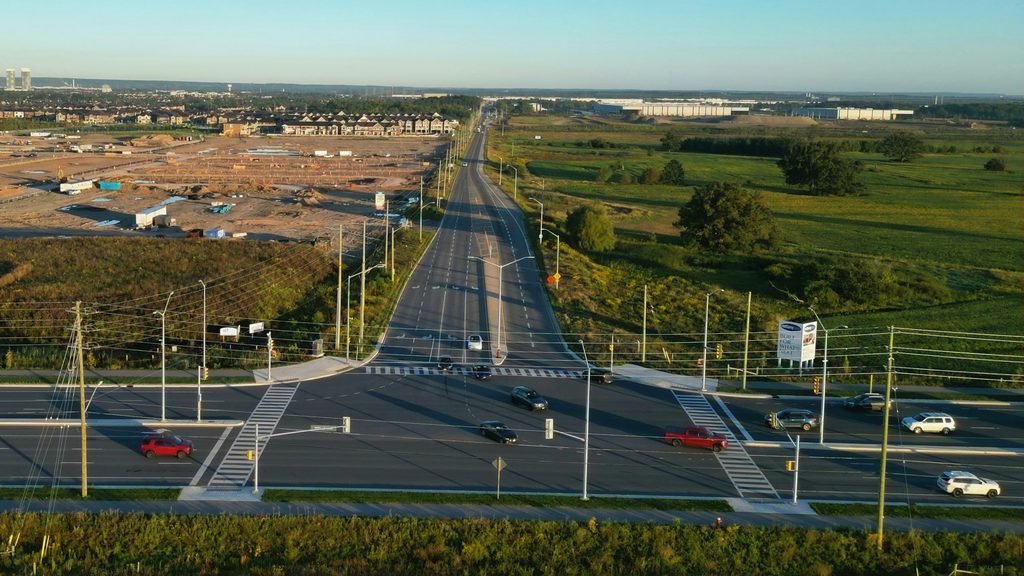
- Live near Whitlock and James Snow Parkway?
- Frustrated by this “No Left Turn” sign?
- You can’t turn north to the 401. Here is why.
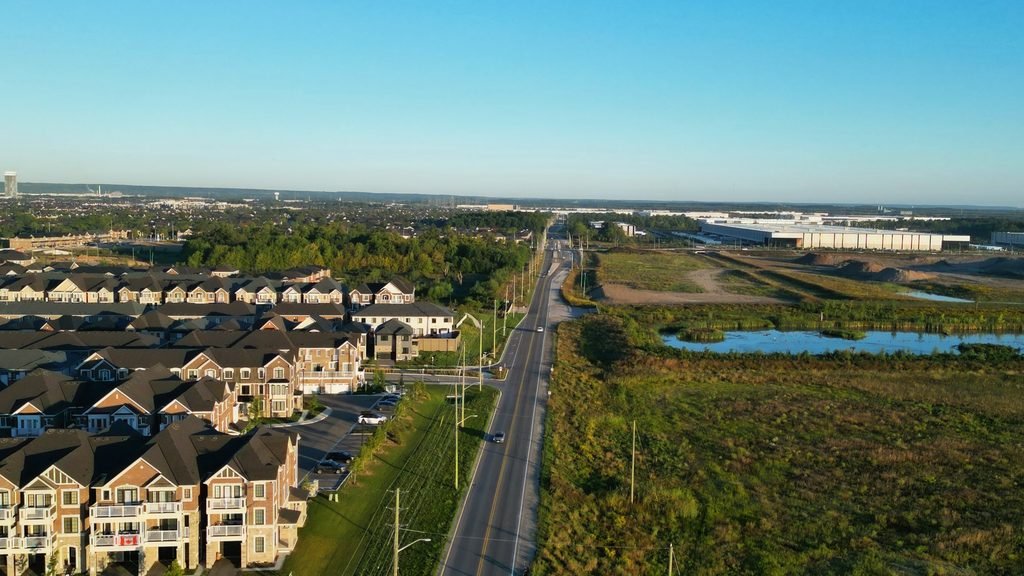
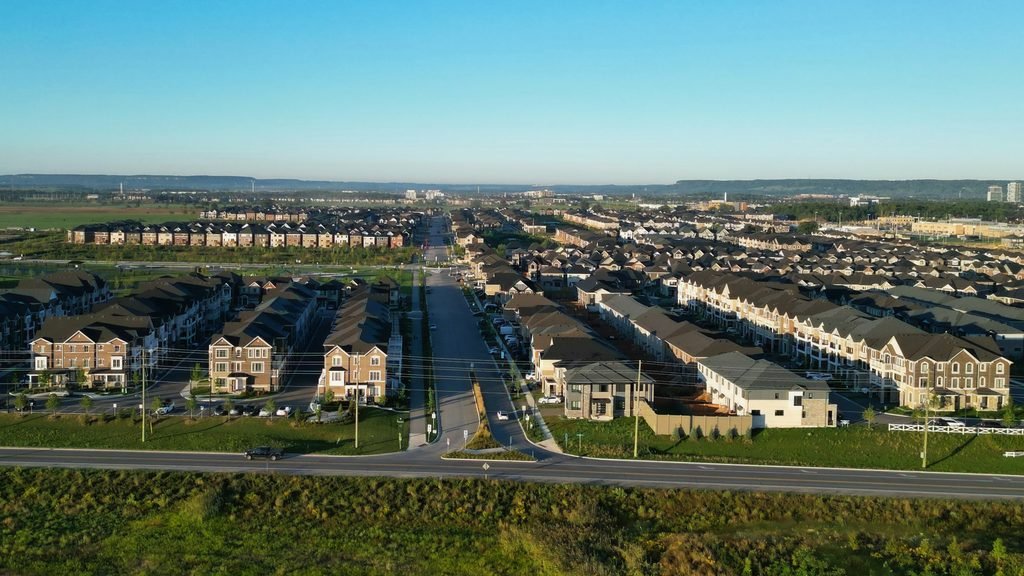
- Thousands of new homes were built…
- But the road expansion is YEARS behind
- This is called “Infrastructure Lag”
- And guess who pays the extra costs of the delay?
- Existing taxpayers. Not the developers.
- Now, add the incoming CN Logistics Hub in 2027
- With up to 1,600 trucks daily from Britannia
- Spilling past our residential neighbourhoods
- Diverting onto unwidened two-lane arterial roads
- Why don’t we scale our roads proactively?
- How do we ensure growth pays for growth?
- Why didn’t we see this coming?