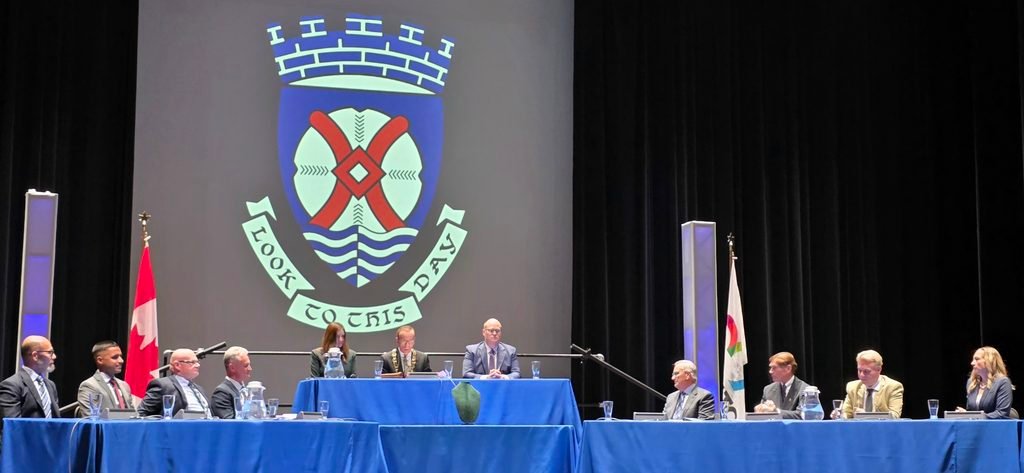
On Monday, November 16, 2026, the Town of Milton’s 2026–2030 Council was officially sworn into office at the FirstOntario Arts Centre. It is the start of a new four-year term and Milton’s first change in Mayor in 46 years.
Unlike regular Council meetings, an inaugural meeting is mostly ceremonial with no staff reports, by-laws, or budget items up for debate or vote.
The meeting agenda included the Mayor and Councillors taking formal Declarations of Office, followed by the Mayor’s inaugural address.
Key Priorities of the New Mayor
In his opening address, Mayor George Minakakis highlighted four main areas of focus:
- Growing Milton’s non-residential tax base and exploring alternative revenue sources to help ease property tax pressures on homeowners.
- Attracting new businesses so more residents can work closer to home, supported by the Milton Education Village.
- Establishing clear service standards, improving internal efficiency, and placing a stronger emphasis on results.
- Addressing everyday pressures including traffic, local transit, parks, recreation facilities, libraries, and community safety, while protecting farmland and natural heritage. He also pledged to keep pushing for all-day GO train service and to seek a seat on the Halton Regional Police Board.
What to Watch For in Upcoming Council Meetings
- Will Council tie new residential subdivision approvals directly to verified capacity of roads, transit, water, and wastewater infrastructure before new homes are built and residents move in?
- How will future budgets maintain existing service levels for Miltonians across the $3.6 billion portfolio of infrastructure assets owned and managed by the Town of Milton ($23.3 billion combined with Halton Region)?
- Will development charges and cost-recovery tools fully fund growth-related infrastructure without shifting the financial burden onto existing homeowners?
- Will capital plans integrate climate vulnerability risk assessments into scheduled asset renewals rather than relying on reactive emergency replacements?
- Will our Regional representatives on Council advocate for upstream investments in community housing, emergency shelters, and long-term care to ease downstream pressures on emergency response and healthcare systems?
What Happens Next
Once agendas are posted ahead of regular Council meetings, I will continue sharing plain-language breakdowns of staff reports and key Council decisions here.