This morning, I discussed the hidden financial costs of Milton’s rapid growth. But true financial stewardship extends far beyond simply balancing the budget on paper. We also have to confront the environmental pressures wearing down our town—and how we adapt our roads, pipes, and facilities to be resilient to extreme weather events and local climate hazards.
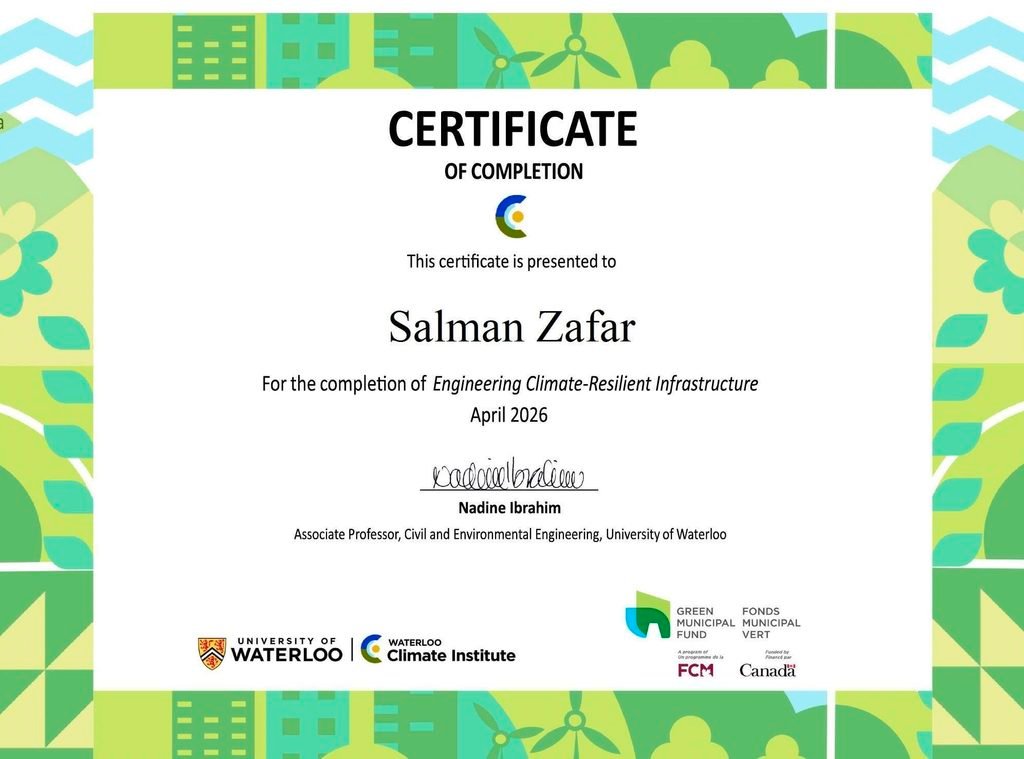
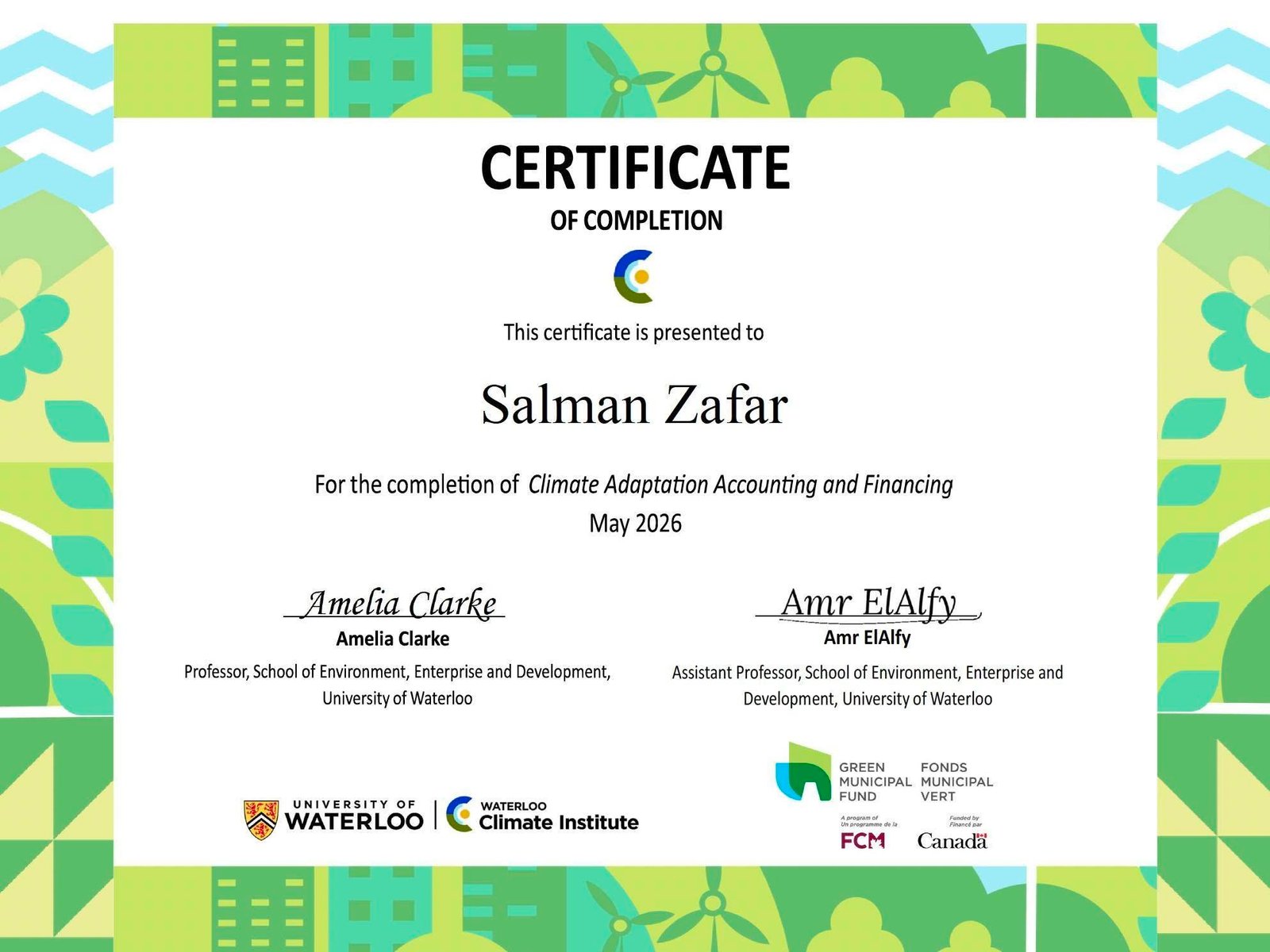
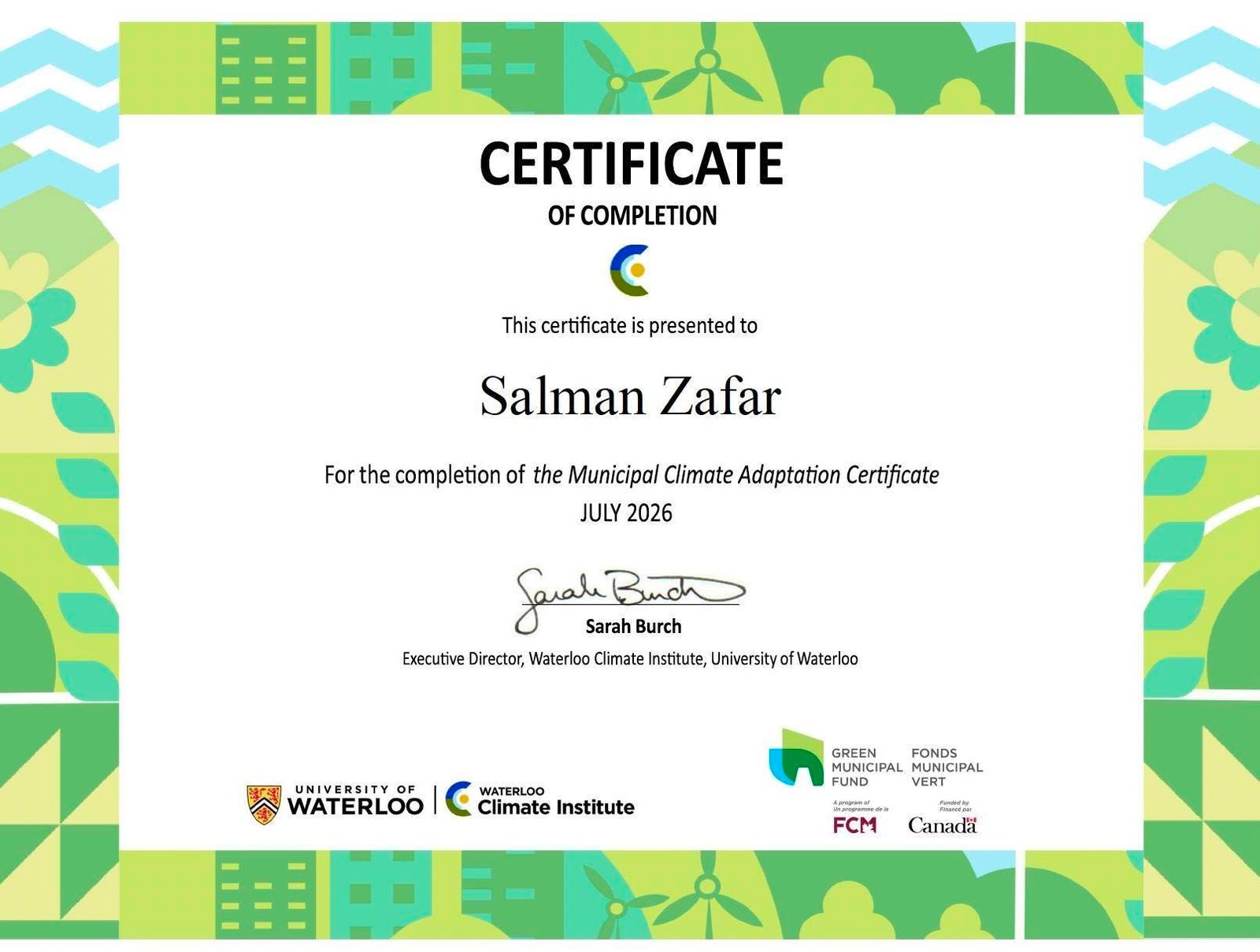
In my day-to-day work overseeing a $12 billion municipal infrastructure portfolio, I see firsthand that managing these compounding risks takes more than good intentions—it demands rigorous, specialized knowledge. That is why I have dedicated the past six months to completing the Municipal Climate Adaptation Certificate with the University of Waterloo’s Climate Institute, as part of their inaugural cohort.
This program was an intense, educational deep-dive into the intersection of engineering, climate risk, and fiscal policy covering the following elements:
- Foundations of Climate Risk and Adaptation
- Engineering Climate-Resilient Infrastructure
- Climate Adaptation Accounting and Finance
- A Mini-Capstone Project
So, how does this translate to Milton?
Local climate hazards are causing public assets to deteriorate prematurely. For decades, municipalities relied on “like-for-like” replacement—waiting for an asset to fail, then rebuilding the exact same thing. This creates a “macroeconomic drag,” a cycle where our capital is continually drained by reactive emergency replacements.
A 2023 Financial Accountability Office of Ontario (FAO) report proved that upgrading infrastructure proactively during its next scheduled lifecycle intervention can lower climate-related costs by $1.1 billion annually across the province.
Putting this proactive strategy into practice locally means:
Diversifying Funding Sources: Property taxes alone cannot fund the scale of upgrades we need. We must tap into innovative financial tools like Green Municipal Bonds and aggressively pursue federal grants, such as the FCM’s Local Leadership for Climate Adaptation program, to relieve the financial burden on local homeowners.
Protecting Your Property Value: This isn’t just about public assets; it is about your biggest personal investment. According to the Intact Centre on Climate Adaptation, catastrophic flooding can reduce the average sold price of a house by 8.2% and increase its time on the market by nearly 20%. Proactive municipal adaptation directly protects your homeowner equity.
Prioritizing Investments by Data, Not Politics: Infrastructure upgrades shouldn’t go to the loudest voices. Advanced mapping tools like HealthyPlan.City allow us to pinpoint vulnerabilities and direct funding equitably, ensuring all neighborhoods are protected.
Balancing multi-million dollar capital budgets and addressing our infrastructure deficit demands rigorous homework, evidence-based planning, and a deep focus on the data. I am running to bring that actionable technical expertise to the table, ensuring we look beyond short-term fixes and structurally secure Milton’s future.
Let’s raise the standard for local representation. If you expect a Councillor focused on substance over visibility, I would love to connect.
 647-262-8759
 electsalmanzafar@gmail.com
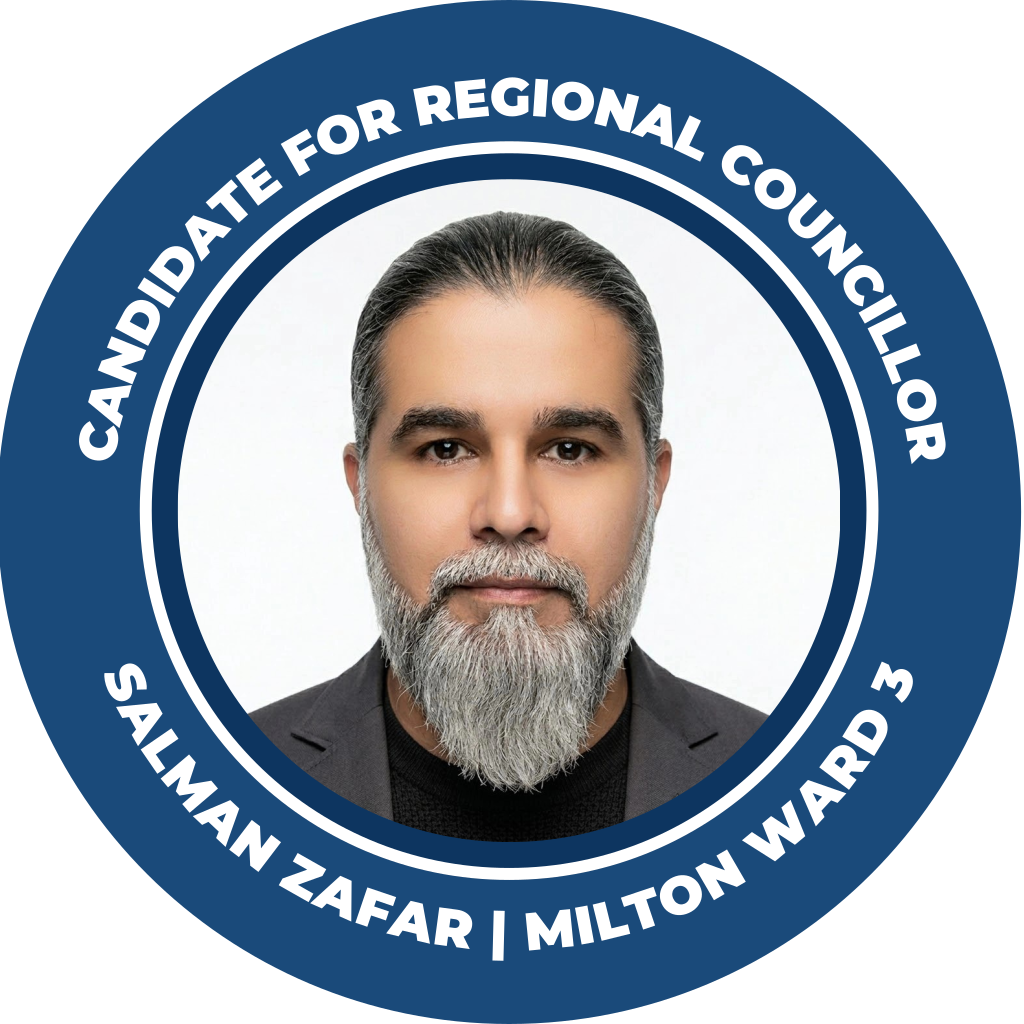
 Candidate for Regional Councillor | Milton Ward 3